New Telehandler
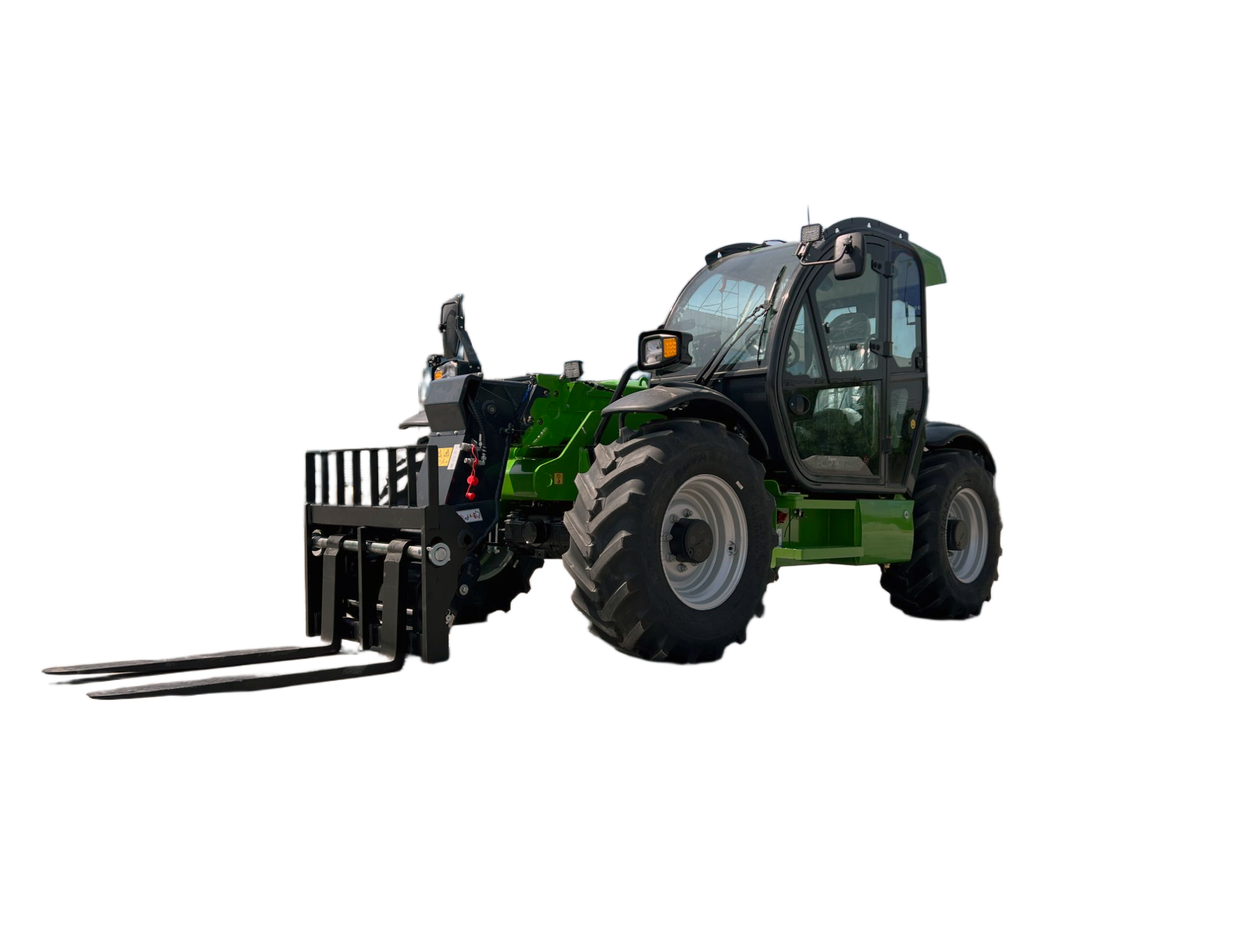
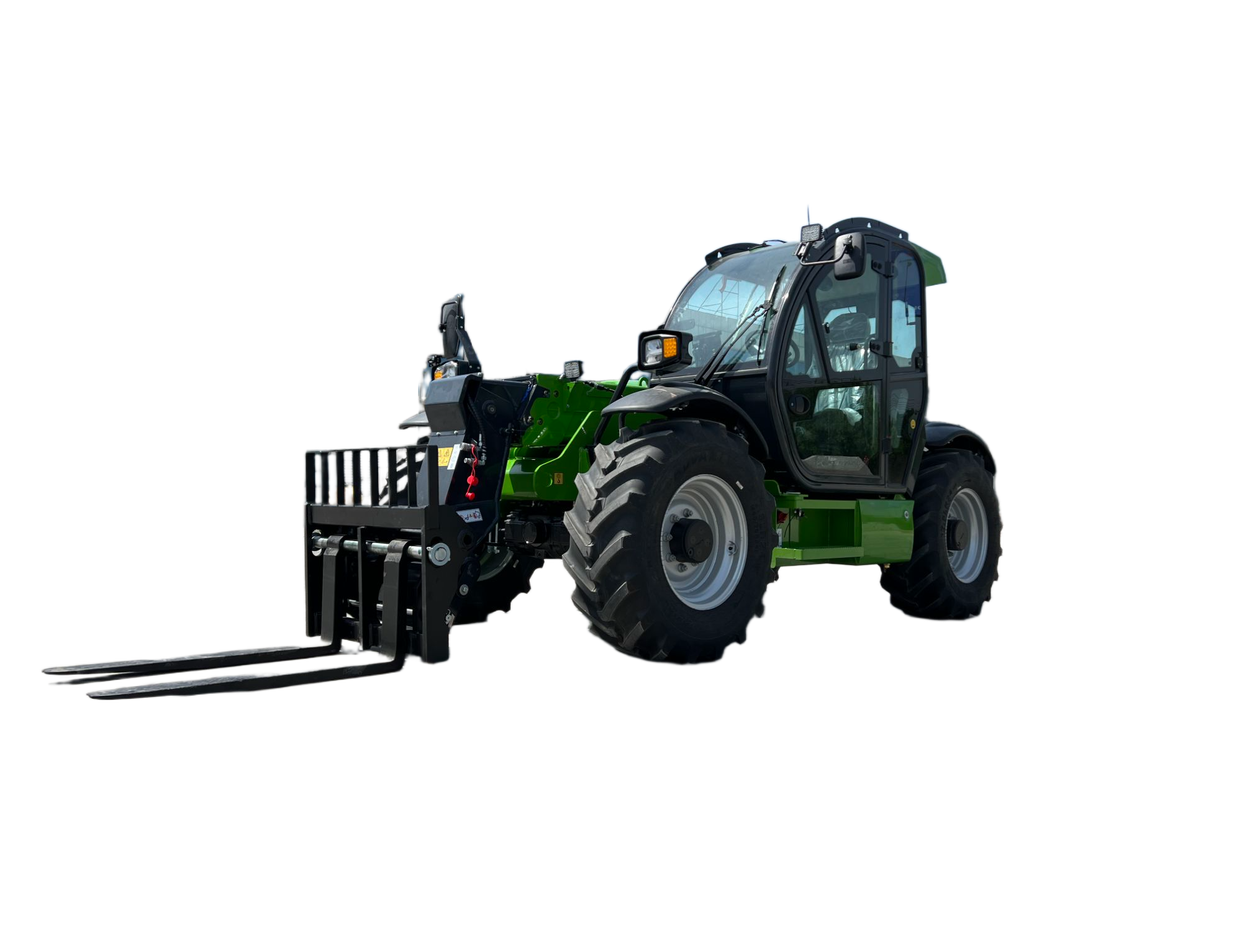
The telescopic forklift developed by IMET is a modern engineering equipment that integrates efficient handling, flexible operation and multi-functional expansion. In recent years, it has shown significant technical advantages and market potential in logistics warehousing, construction, agricultural operations and other fields. Through innovative mechanical structure and intelligent control system, this equipment solves the operation problems of traditional forklifts in space-constrained or complex terrain environments, and has become one of the important representatives of industrial equipment upgrades.
1. Core technology: telescopic arm design and multi-scenario adaptability
The core innovation of the telescopic forklift lies in its retractable arm structure. Unlike the fixed-length forks of ordinary forklifts, IMET's equipment uses a hydraulically driven multi-section arm, which can freely adjust the length (usually covering a range of 6-12 meters) to achieve horizontal extension or vertical lifting. For example, in warehouse high-rise shelf operations, operators can accurately store and retrieve goods of different depths without moving the body, which improves efficiency by more than 30%. In addition, some models are equipped with a 360° rotating platform, allowing operators to complete multi-angle loading and unloading in a narrow space. This design is particularly suitable for the complex environment inside containers or construction sites.
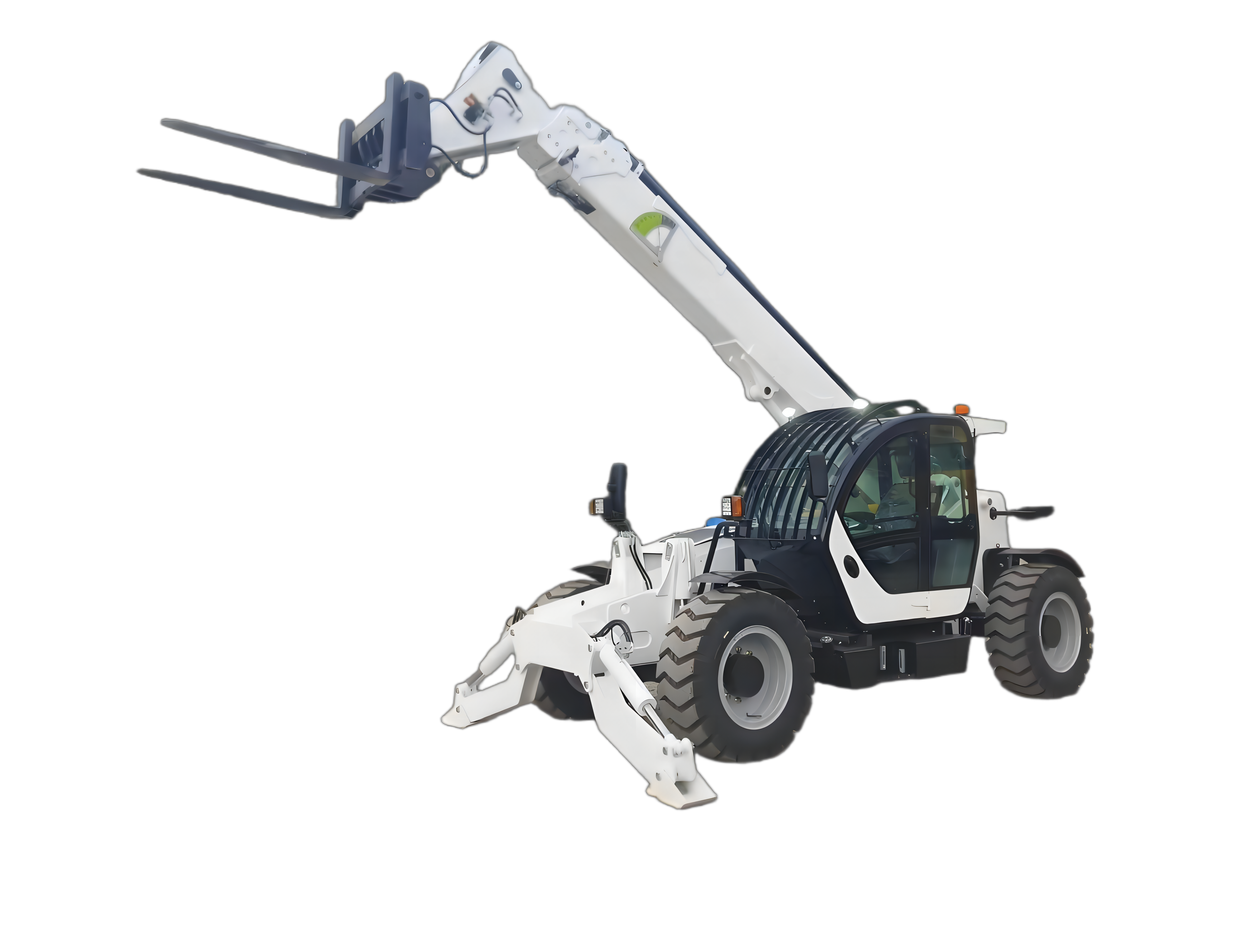
In terms of power system, IMET offers three configurations: diesel, electric and hybrid. The electric version is equipped with a high-energy-density lithium battery, which supports 8 hours of continuous operation, and its zero-emission characteristics make it the first choice for indoor storage; the diesel model enhances the passability on rugged ground, and the tires can be equipped with solid tires or off-road tires to adapt to outdoor scenes such as mines and farms. According to user feedback, its independently developed intelligent torque distribution system can automatically identify the ground slope to prevent slipping or rollover, and its safety meets the EU CE standard.
2. Industry application: cross-border value from agriculture to emergency rescue
In the agricultural field, the equipment shows outstanding versatility. By adding accessories such as bale clamps, feed buckets or aerial work platforms, the same machine can complete a variety of tasks such as forage transportation and orchard pruning. For example, a case of a ranch in Inner Mongolia shows that telescopic arm forklifts have replaced the traditional tractor and manual operation mode, and the daily feed feeding efficiency has increased by 50% and the labor cost has been reduced by 60%.
The construction industry benefits from its aerial operation capabilities. In the construction of a high-speed railway station in 2024, the IMET forklift was equipped with a glass installation module, and only two workers were needed to complete the precise lifting of a 12-meter-high curtain wall, avoiding the time loss of scaffolding construction. In addition, its rapid response characteristics are highly recognized in natural disaster rescue. The Sichuan Fire Department once used a modified telescopic arm forklift to successfully rescue many trapped people in the ruins after the earthquake, thanks to the integrated design of the life detector at the end of its arm.
3. Intelligent upgrade: digital twin and remote operation and maintenance
IMET introduced the Internet of Things technology in its second-generation products. The onboard sensors collect data such as equipment posture, oil pressure, temperature, etc. in real time and upload them to the cloud platform. Managers can remotely monitor the status of the fleet and predict the maintenance cycle. For example, the system will prompt the need for hydraulic oil replacement 3 days in advance to reduce unexpected downtime. A more cutting-edge application is digital twin technology: in a smart logistics park in Hebei, virtual models and actual equipment run synchronously, and engineers use AR glasses to guide novices to complete complex operations, shortening the training cycle by 40%.
Market data proves its technical competitiveness. In the first quarter of 2024, IMET telescopic forklifts accounted for 18% of the domestic market and were exported to 15 countries including Southeast Asia and Africa. Compared with similar products in Germany, its price advantage is 20-30%, while its failure rate is 1.2 percentage points lower than the industry average. However, industry analysts also pointed out that durability in extreme environments (such as -30℃ low-temperature start-up) is still the focus of the next technical research.
4. Future trends: Integration of automation and new energy
With the growing demand for unmanned operations, IMET has begun testing L4 autonomous driving prototypes. Through the fusion of lidar and visual algorithms, the vehicle can autonomously plan the pallet handling path and achieve obstacle avoidance in the mixed human-machine operation area. What is more noteworthy is the research and development progress of the hydrogen fuel cell version-the prototype vehicle trial-produced in 2025 can last for 6 hours after hydrogenation for 3 minutes, which is expected to solve the pain points of electric equipment in long-term operation scenarios such as cold chain warehousing.
In essence, the evolution of telescopic forklifts reflects the transformation path of China's equipment manufacturing industry: from single-function imitation to original technology integration, and then to green and intelligent leap. As stated in an industry report: "This type of equipment is redefining the boundaries of 'handling'. It is not only a tool, but also a fulcrum for reconstructing productivity." For small and medium-sized enterprises, choosing a telescopic arm forklift that suits their own scenarios may become a key decision to reduce costs and increase efficiency.